Memories of Indigo Rebellion
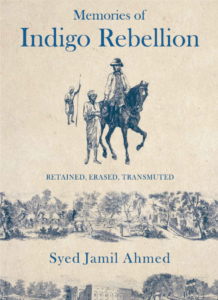
The core members of Spardha: ITC, led by Syed Jamil Ahmed, have completed extensive ethnographic research on the Indigo Rebellion in colonial Bengal. The research extends the inquiry from the past to the present so as to examine how the memory of the Indigo Rebellion is retained, if at all, by the rural inhabitants of the indigo districts in Bangladesh. Do they remember the rebellion? Or has it been erased from or transmuted in their memory? What are the implications of the retained, erased, or transmuted memory? In order to answer these questions, the research analyses ethnographic data collected from 57 sites located in the following 14 administrative districts of Bangladesh: Nilphamari, Dinajpur, Rangpur, Faridpur, Madaripur, Khulna, Bagerhat, Jessore, Narail, Magura, Jhenaidah, Kushtia, Meherpur and Chuadanga. The investigation began on 16 February 2020, and after a hiatus for the first wave of the coronavirus pandemic from March to August 2020, ended on 27 March 2021, by which time the second wave had set in. Data obtained in the interviews have been examined by employing critical theorizing produced by memory studies in general and collective memory studies in particular. The result of the research is expected to be published soon by University Press Ltd in a volume titled Memories of Indigo Rebellion: Retained, Erased, Transmuted by Syed Jamil Ahmed.
The ethnographic research that forms the crux of this monograph was possible because it was supported by the University of East Anglia Quality-Related Global Challenges Research Funds (QR GCRF), a research program funded by UK Research and Innovation (UKRI) Research England. It was a tripartite collaborative project titled ‘Overcoming the Indigo Giant’, partnered by the University of Dhaka, Bangladesh Agricultural University, and the University of East Anglia, and supported by a QR GCRF fund.