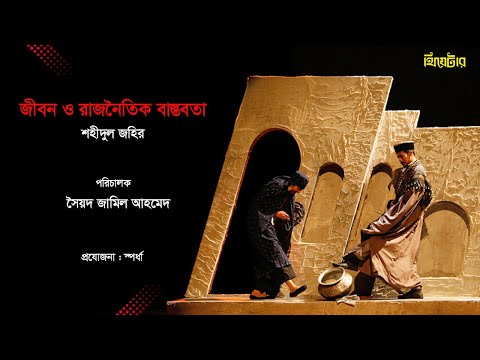



Jibon O Rajnoitik Bastobota/Life and Political Reality (2019)
Novel: Shahidul Zahir
Design and Direction: Syed Jamil Ahmed
One of the earliest postmodernist writers from Bangladesh, Shahidul Zahir penned Jibon O Rajnoitk Bastobota as a novel that treads through magic realism to articulate the gritty complexities of post-War Bangladesh following the Liberation War (1971).
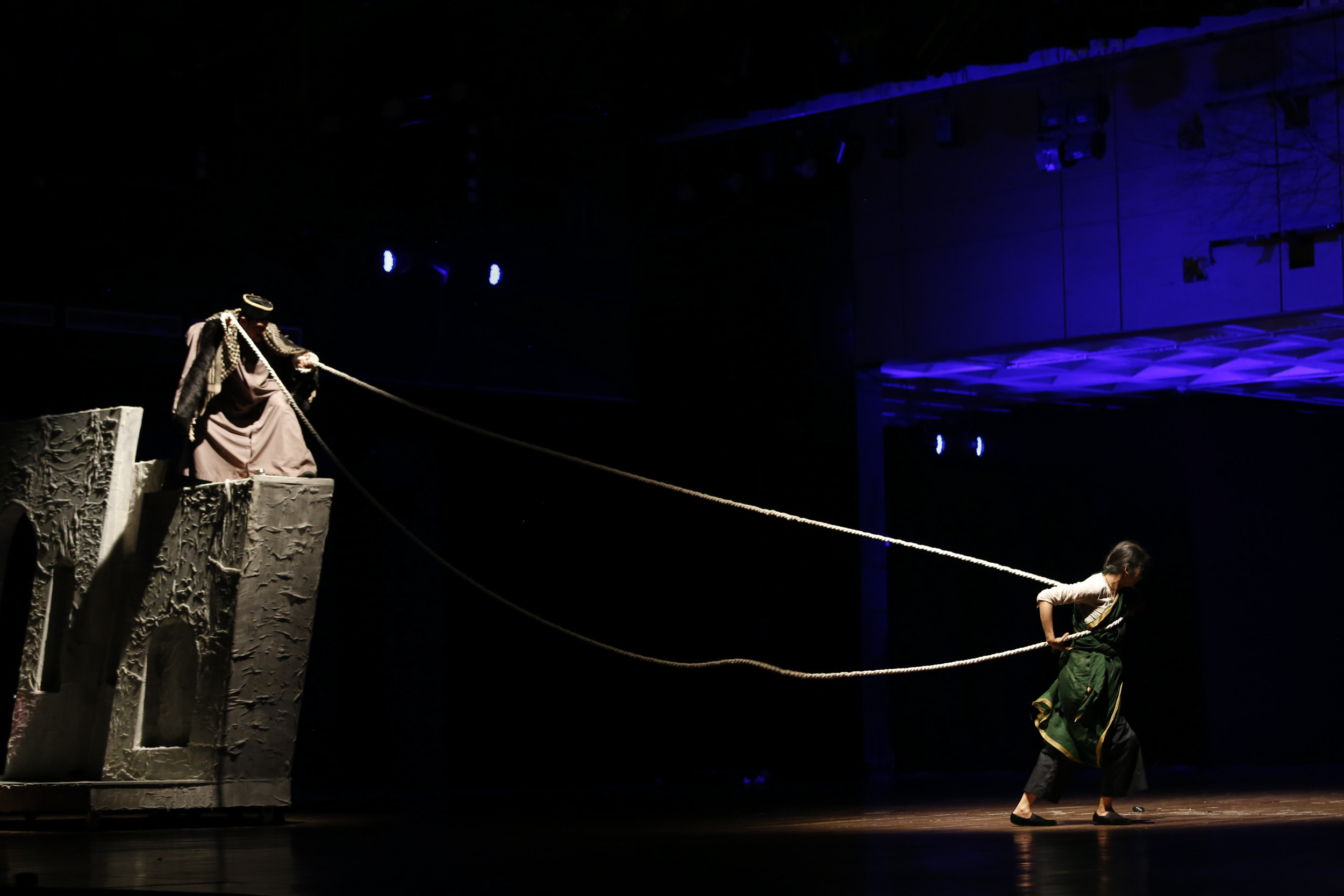
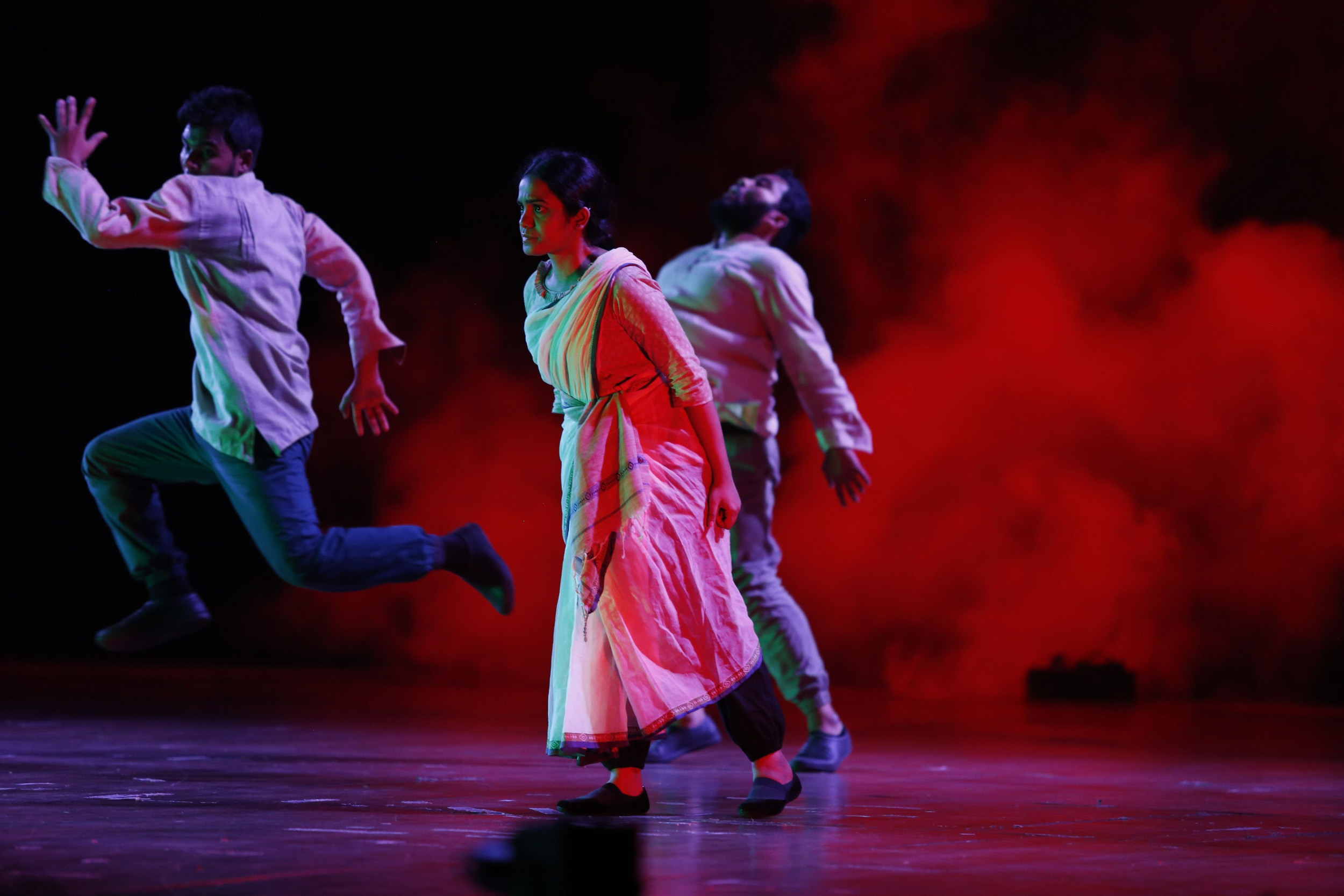
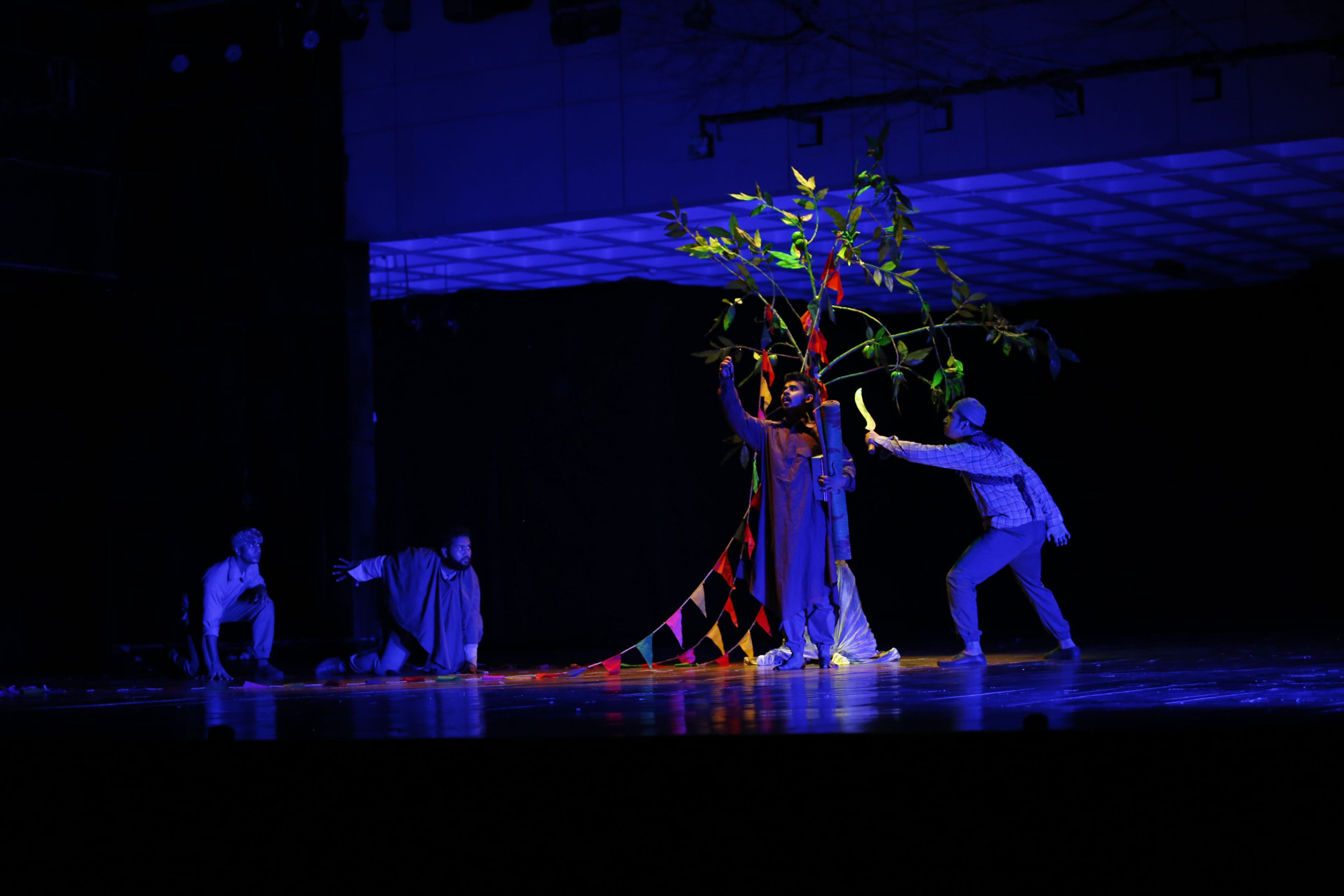
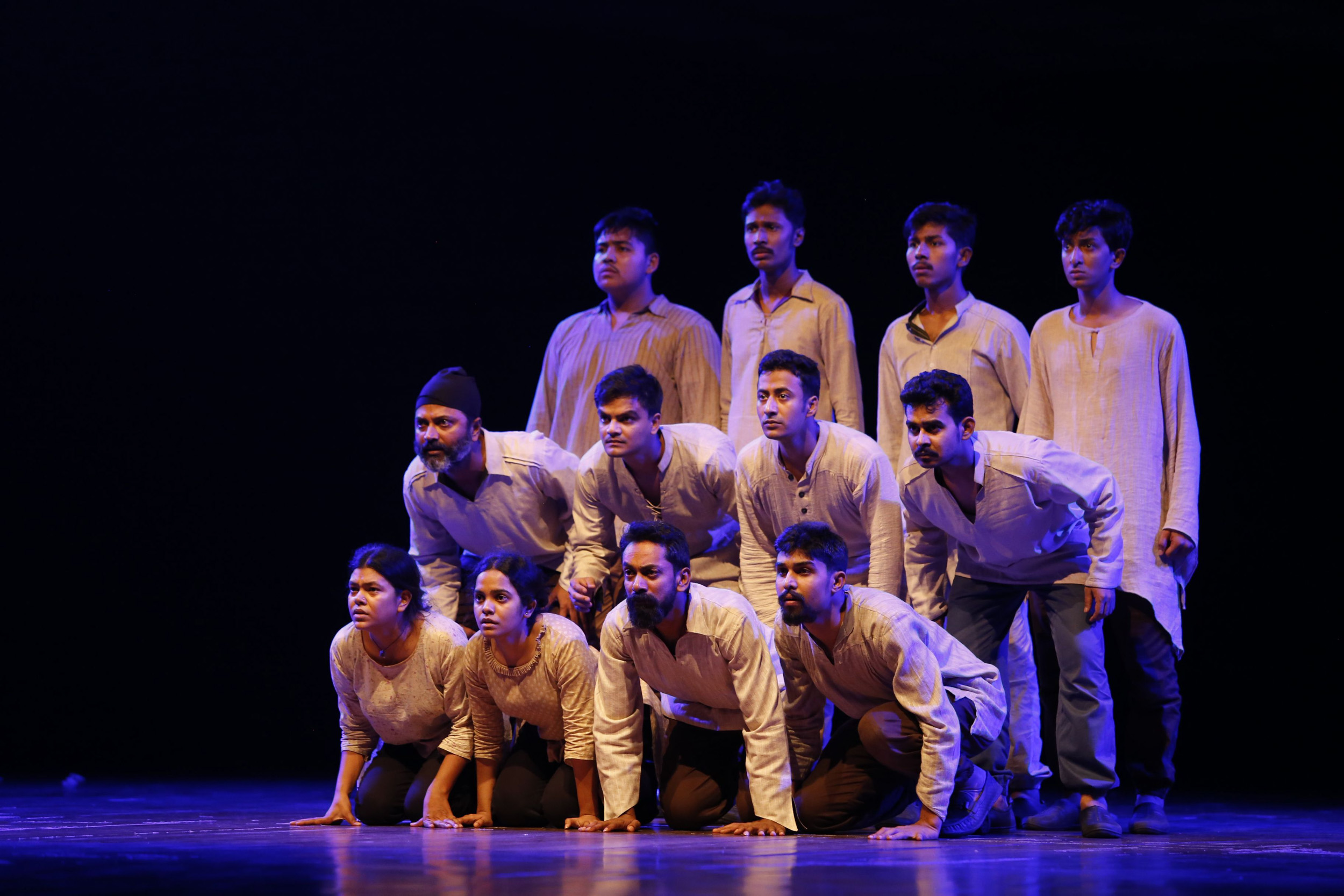
Reimagined for the stage under the vision of Syed Jamil Ahmed in 2019, the stage production is not a descriptive narration of the war, but instead is an unflinching dissection of the shifting ‘truths’ of the happening present, shaped by the lived experience of 1971.
The year is 1985. Fourteen years after the war, a young man from Shyamaprasad Chowdhury Lane of Lakshmibazar, Abdul Majid, notices Abul Khair, microphone in hand, delivering a charged speech to the public near the Police Club. On the day Pakistan Army and their local collaborators first assaulted Lakshmibazar neighborhood during the Liberation War in 1971, three women were raped and seven men were shot dead – all instigated by Abul Khair’s father, Bodu Maulana.
In the final days of the War, as the country waited for freedom to come any moment, Bodu Maulana’s local militia picked up Abdul Majid’s sister, Momena. Abdul Majid found her dismembered body four days later on the western end of Rayerbazar, by the Buriganga.
The war ended. Bangladesh gained independence. Bodu Maulana fled.
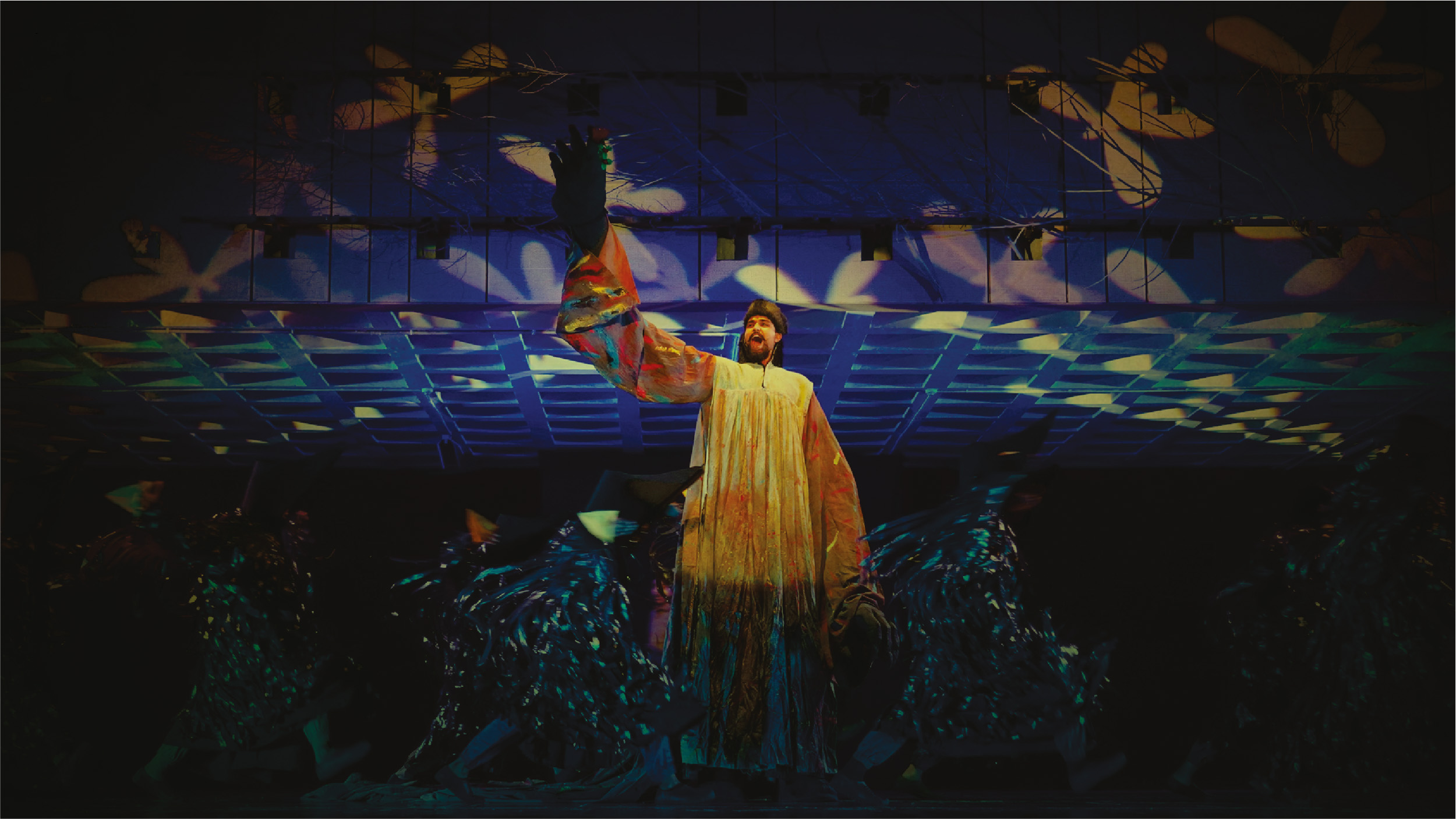
Yet two years later, in 1973, when a general amnesty was declared rehabilitating the war criminals, not only did Bodu Maulana return, but the residents of Lakhsmibazar spotted him still cloaked in that same robe he used in ’71. Aziz Pathan, the local leader of a political party that played a key role in organizing and leading the war and a Lakshmibazar native himself, whose home Bodu Maulana looted with military collusion during the war, that very Aziz Pathan accepted Bodu Maulana’s return, saying, “As my Leader himself has forgiven Bodu Maulana, I hold no personal grudges against him. In politics, there are no lifetime allies, nor eternal enemies. So then, what else is there to do but to forget the past?”
It is early 1986. Abdul Majid names his newborn daughter after her slain sister: ‘Momena’.
Catching wind of this, Bodu Maulana, who otherwise avoids crossing paths with Abdul Majid, stops him on the street one day and says, “Named her after your sister… haven’t forgotten her, I see!” The moment affirms Majid’s conviction that Bodu Maulana is very well aware that the Abdul Majids of Bangladesh have refused to erase from their memory the nine months of 1971, despite the best efforts of the political party run by collaborators like him.
Caught in the crosshairs of such a perilous and silent threat, Abdul Majid chooses to leave the behind the neighbourhood that has been his and his father’s home.
A piercing portrait of memory, violence, and political betrayal, Jibon O Rajnoitik Bastobota rendered visible the scars that time fails to erase, and the silence that follows when history is rewritten not in books, but on the bodies of the forgotten.